Showing posts with label Business. Show all posts

Tuesday, October 2, 2012

Preconceived Notions and Police Brutality

Yesterday, I wrote a bit about how a growing number of people these are more and more inclined to dig their heels in and defend core beliefs defiantly, regardless of any facts or situations presented to them. Not that people are using their beliefs to inform their judgement, but are doubling down on their belief systems as the only contributing factor that matters. This morning, I find this in my news feed:


In the social media dominated culture that we find ourselves increasingly immersed in, my immediate reaction is to share this with other people. This need to share it isn't just about internet Memes or Viral Videos: it is part of our natural human need to bond with others by giving them the opportunity to share in our emotional response. But in doing so, I am also assuming that those I share this video with are going to share my emotional response. Which brings me back to beliefs informing opinions, instead of the other way around.

I have the great misfortune of having a large group of online friends with diverse philosophical backgrounds. I say misfortune because I often find myself dragged into social, political, theological or ideological debates when either making posts or commenting on the posts of others. Don't get me wrong - I enjoy the debates, and actually have an unnatural inclination for intellectual head-butting. But an overabundance of unplanned online arguments can be time consuming and exhausting.
A silhouette showing a police officer striking...


But that's neither here nor there. However, when I consider posting this video, I do so with the clear knowledge that I am able to fully predict the responses this video is going to illicit from a decent number of my online posse. There are those I know will express outage at an obvious example of police brutality, and there are others that will gladly support the actions of a law enforcement veteran doing what needs to be done in order to quell an unruly mob. Without even exposing them to the video, to the actual physical evidence of the topic at hand, I can safely predict their responses.

Now, is this necessarily a bad thing? Maybe not. Obviously, those inclined to side with law enforcement are more likely to give police the benefit of the doubt, while those more fearful of government restriction are going to be less understanding. But how reality-based can either position be if the conclusions are drawn beforehand? I'm not questioning the validity of either argument, but rather, the validity of an argument that might possibly be impervious to outside influences. If our minds are made up before even approaching a situation, how objective can we truly consider ourselves? And if our initial reaction is always to accuse the other side of doing just this, how sure can we be that our own judgement is just as clouded?

I'm not saying we shouldn't trust our own opinions. What I'm suggesting is that we be more aware of what is informing them.
Enhanced by Zemanta

Friday, November 26, 2010

Yet Another Bank Commercial That Pisses Me Off

Does this commercial piss off anybody else besides me?


Here we have an average blue-collar worker (notice the clean suit and tie) with a decent job (notice how he has an overseas business "colleague" that sends him surprise gifts, and not a co-worker that drew his name in a Secret Santa pool with a $10 limit) that apparently pays well (notice the clean and modern kitchen of what appears to be an expensive city apartment) that receives two unexpected surprises: A rare and popular toy from a Japanese "colleague," and a $1000 prize from entering in a contest by activating a Citibank credit card.

Now, the intended sentimental holiday message is supposed to be about an ordinary guy who is inspired to give a valuable toy away to charity by the generosity of his credit card's financial institution. All I can see, however, is the story a greedy corporate douche who receives a gift that turns out to be quite valuable, and so immediately begins fantasizing about all of the money he can make by auctioning off a children's toy to the high bidder online for a boatload of cash that he doesn't appear to be hurting for.

But then he wins $1000 dollars in an advertising scheme designed to convince economically inexperienced individuals to unwittingly enslave themselves to a financial institution at 20% APR for the rest of their natural lives with the promise of fabulous cash prizes to be won. So, now that he has lucked into a chunk of unearned excess income already, he decides to donate to charity, not out of the kindness of his heart or the eagerness to do good, but because now it has become exceedingly convenient for him to do so. Then, instead of donating the $1000 to a charitable organization dedicated to housing and feeding the homeless, he takes the valuable toy that didn't cost him a dime, and will be worthless in six months anyway, and drops it in the nearest toy-drive bin.

A bank attempts to sell memberships to their credit-cards with the false promise of easy money by disguising it as a demonstration of the desire to do good to others by donating to charity, and they still can't manage to make it any less shallow than some greedy prick who only considers being charitable when it becomes extraordinarily convenient and manages to not cost him a penny.

This commercial is the perfect example of:

a) How screwed up we are as a nation and a culture, and
b) Why I shouldn't be watching any television this holiday season.
Enhanced by Zemanta

Wednesday, June 30, 2010

Amazon Puts 70% Royalty in Place for DTP Publishing

Image representing Amazon Kindle as depicted i...Image via CrunchBase
Amazon Puts 70% Royalty in Place for DTP Publishing

Well, it looks like Amazon might be dragging the big publishing companies into the new technology once again.

One of my main complaints with eBooks has always been that the publishing companies were raking in extra cash at the expense of both the artist and the consumer: with eBooks being sold at the same or similar price as physical books in most cases, publishers were successfully eliminating printing and shipping costs, but without passing the those savings onto to the artist through larger royalties, or the consumer with lower prices.

Tackling this issue has been a long time coming. The massive writer's strike in the entertainment industry a couple of years ago was over very similar circumstances; distribution companies were tapping into extra income streams through new media distribution channels (such as streaming video and video on demand), but were being extremely vague about these new ventures when it came to sharing royalties with writers under contracts written up before the explosion of communications technology advancements. It is actually shocking that book publishers have been able to deflect similar arguments and concerns for so long.

Now, with Amazon offering 70% royalties for sales on books priced between $2.99 and $9.99, Amazon is effectively forcing the publisher's hand on their sketchy pricing policies regarding new technology book sales, while also easing criticisms of their price reduction policies. This should not only improve writer confidence in releasing works in eBook format, but the lower pricing involved with the royalty shift should also result in increased book sales. Of course, Kindle sales might also increase a bit, which I'm sure is one of the main motivating factors behind the move.

I'm sure a lot of people in the industry will have some very persuasive and logical arguments on why this new royalty scale for eBook publishing is a bad thing. But I seriously doubt any of them will be able to convince me that either the publisher or the artist will stand to lose any money.
Enhanced by Zemanta

Monday, June 21, 2010

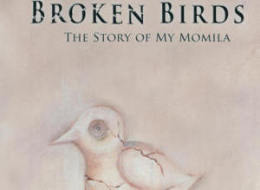
The Holocaust Ended? In Jeannette Katzir's "Broken Birds", Her Mother Brings It With Her To Los Angeles


Jeannette Katzir's struggle to get Broken Birds: The Story of My Momila published serves as yet another example of why "self-publishing" should be treated as a legitimate form of literary output, and not looked down upon by industry insiders. Publishers more concerned with market trends than exceptional writing or storytelling are constantly passing over books and authors that do not easily fit in whatever niche markets the publishers and agents are gearing towards that particular quarter.

This focus on markets is understandable as far as the business end of publishing is concerned, but adds doubt to the argument that self-published authors aren't "real" authors because they haven't proven themselves by passing through the various filters of the system. For every book rejected for inferior writing, there is undoubtedly one (if not more) passed over merely because it isn't the right time, or sales in that genre are currently lackluster.

Keep this story in mind the next time you consider passing over a Self-Published book because it isn't a "real" book. Some might resort to self-publishing because they couldn't get past the editor, but there are just as many that couldn't make it past the publicist.
Read the Article at HuffingtonPost
Enhanced by Zemanta

Saturday, June 12, 2010

Oil Rig Safety or Zhu Zhu Pets? Hmmmm...


I realize that the focus of this article over at HuffingtonPost is on the GOP acting as giddy as schoolgirls over news coverage of the economic impact the drilling moratorium will have, and that I should probably be ranting about the concept of arguing that we should overlook safety issues critical to human life and ecological purity. But I really can't get beyond this one quote halfway through the article:

Peter Duet, in a thick Louisiana accent, tells the assembled crowd that he is a single father and that his daughter recently asked him why he works so much at Port Fourchon. "Baby, so daddy can take you to Wal-Mart and buy you toys[.]"

Why is daddy begging the President to bypass the investigation of safety regulations that could potentially prevent another massive oil rig disaster just so he can go back to working so many hours that his daughter asks why she rarely sees him? Does he instinctively explain that he is trying to support them financially, or working to provide a comfortable future for her? No, first thing out of his head is that he slaves away for one massive corporation because he needs lots of money so they can buy lots of cheap crap from another massive corporation that makes its money by selling products made overseas by overworked wage slaves for yet another massive corporation.

I understand that this is a highly consumer-based culture, but to see it stated so shamelessly is kind of unsettling. Not only is the pursuit of amassing piles of poorly made plastic (and potentially poisonous) possessions the first thing to pop in this guy's head when "Baby" asks why she never sees him, but it doesn't even occur to him to change his reply to something more rational before sharing this anecdote with a national television audience.

Are we that twisted as a nation that we instinctively put the pursuit of the mindless accumulation of physical possessions ahead of the obvious concerns of food, shelter and well-being? I have no doubt that Peter is a good man that is actually working hard to provide for his daughter. I can even understand that his reaction to the massive BP oil spill and rig explosion has more to do with his personal needs than global concerns; as a single father, his world begins and ends with his daughter. But it still bothers me that the first thing he can think of to explain to his daughter why he works so hard s because they need to Buy More Stuff. We have lost something integral to our existence as human beings. As a nation, as a culture, as a people, we are in danger of losing ourselves.

Enhanced by Zemanta

Friday, June 4, 2010

McDonald's Recall: "Shrek" Glasses Contain Toxic Metal Cadmium


Cheaper is better! Cheaper is better!

*Massive oil spill caused by cutting corners*

Cheaper is better! Cheaper is better!

*underpaid workers killing themselves in China*

Cheaper is better! Cheaper is better!

*McDonald's almost poisons millions of children*

I think I see a pattern here...
Read the Article at HuffingtonPost
Reblog this post [with Zemanta]

Monday, March 15, 2010

Publishers: eBooks + Libraries = Bad (For Them)

San Diego City College Learing Recource City r...Image via Wikipedia
Trashing eBooks in one form or another seems to be all the rage in the publishing industry these days. You can't really blame publishers; it must be hard when you wake up one morning and find that POD services and eBooks have suddenly obliterated your virtual monopoly on the market. But as the debates rage, a lot of attitudes and philosophies towards the reading public that were lurking below the surface are being eagerly aired for public consumption.

Take, for example, this quote from Eric Hellman's blog, Go To Hellman, about Macmillan CEO Sargent:


"That is a very thorny problem", said Sargent. In the past, getting a book from libraries has had a tremendous amount of friction. You have to go to the library, maybe the book has been checked out and you have to come back another time. If it's a popular book, maybe it gets lent ten times, there's a lot of wear and tear, and the library will then put in a reorder. With ebooks, you sit on your couch in your living room and go to the library website, see if the library has it, maybe you check libraries in three other states. You get the book, read it, return it and get another, all without paying a thing. "It's like Netflix, but you don't pay for it. How is that a good model for us?"Eric Hellman, Go To Hellman, Mar 2010


Libraries + eBooks equal free Netflix? Well, if you ignore that libraries don't loan stuff out of state, that libraries are free lenders regardless, and a host of other problems with this comparison... well, it just shows how good the major publishers are at ignoring a lot of the realities inherent with the advancement of the digital age. The short answer to his question "How is that a good model for us?" It isn't. Unfortunately for you, however, the decision about how the future will unfold isn't up to you.

This kind of attitude towards the market is frighteningly indicative of how the producers of consumer goods (not just publishing) view the structure of the open market in our increasingly consumer-driven world. It used to be all about Supply and Demand; We demand, They supply. But these days corporations have grown accustomed to manipulating both sides of the equation. So when they suddenly find themselves unable to dictate exactly how and when we will be able to purchase what they want us to buy, things start to get a bit chaotic, a bit more crazy, and a lot less logical.

You think these major publishers are pulling their hair out over Amazon because it has successfully increased book sales by drastically increasing accessibility? No, they hate Amazon partially because they've ruined the "Buy in Bulk From Us and Bargain Bin What You Don'T Sell" business model, and mostly because they have given the public what publishers have increasingly attempted to deny you: choice.

Ever wonder why when you walk through a Borders, you see three copies of the same books always lining the shelves? Or why you can never find what you are looking for, unless it isn't the newest "Best Seller" or hot celebrity author? They have enough room to stock ten times as many titles as they do. Why don't they? Because the publishers and distributors have a say in what they order and what they stock. The fact is, over fifty percent of the titles sold by Amazon in any given year aren't even available in these borderline monopoly bookstore chains, and you can bet the big boy publishers don't fare well in that equation.

There's a lot to think about in this and other statements by Sargent in this must-read article. Like how Sargent thinks the big publishers will survive because their too unprofitable to fail, or how eBooks are bad because they don't deteriorate and force people to buy new copies (nothing spells profits like planned obsolescence). But what it really gets you thinking about is how these companies aren't concerning themselves with how to compete in a new marketplace. Instead, they are devoting their energies to trying to keep the marketplace the way it is, to somehow hobble the evolution of eCommerce and an ever-changing market so it adheres to their rapidly antiquated business model. They've realized that it has come down to either Us or Them.


Reblog this post [with Zemanta]

Thursday, January 28, 2010

MacMillan and Whine: The Futility of a Crusade Against Digital Book Piracy

At the Digital Book World publishers conference being held this week in New York City, Macmillan president Brian Napack took the stage as guest speaker to call for his fellow publishers to take up an aggressive fight against digital book piracy, encouraging them to coordinate in a series of lawsuits and anti-piracy legislation. His goal, clearly stated, is to stop the spread of sharing copyrighted intellectual materials over the internet.
Nuevo Kindle de AmazonImage by LA100RRA 3logs via Flickr

Where have we heard this battle cry before?

For those of you who answered the music industry, award yourselves ten points for paying attention over the last decade.

Since you were paying attention, we can assume that you also remember what a complete failure their Commerce Crusade turned out to be. Not only did they come nowhere near ending online file sharing, it is still managing to gain negative press by gleefully slapping million dollar fines on young girls and single mothers. All of their legal posturing and attacks have failed to make anything resembling a dent in online piracy, or file sharing, or watever you want to call it. Oh sure, they took down Napster, but just look at the difference that made.

Now, they have handed the torch over to the publishing industry, and some of the major players within seem
to be more than eager to follow suit and go after what they perceive to be a drain on their profit margins.

But is it really? It is a fact that book sales have been dropping drastically in recent years, and while it hasn't been as crippling as the drop seen in newspaper and magazine sales, it is still a healthy chunk. Considering the predominance of computer use, the growing market for eBooks, and recent studies that (very loosely) estimate losses in the millions from illegally downloaded books, it doesn't seem like a far-fetched premise.

Then again, it does avoid missing the bigger picture. The country is in what can easily be described as economic turmoil, and this is having an effect on commerce across the board. A major key to successfully selling any kind of luxury merchandise is offering an affordable product that people can afford. With unemployment rising and pay-scales dropping, many people can no longer afford to buy books casually. And with the list price of most hardcover books being more expensive (and eBook list prices are inexplicably as expensive) than the latest Blu-Ray release or a dinner for two at Applebees, many people are taking a pass.

There's also the question of how big the problem could actually be. Unlike the music industry, which releases all of its products in easily copyable formats, publishers don't normally count on technology for the bulk of their sales. Nook and Kindle sales might be on the rise (and modestly so) along with other eReading formats, but they still make up a vary small percentage of the commercial reading population. The majority of readers still prefer good old fashioned paper and ink. And even when considering that percentage of electronic reading, there is no iconic Napster to publicly slam for making the last Harry Potter available to the masses. And let's be honest; no matter how many copies of the Twilight series were downloaded illegally, the book still made lots of money for all involved.

Can you get books cheaper through online markets and major bookstore chains? Sure, but you can also get them for much cheaper at flea markets and used book stores. You can even get them free through legal channels, such as book trading sites like PaperBackSwap and BookMooch. And let's not forget public libraries; who knows how many sales publishers have lost from libraries simply giving them away for free. I'm not even counting the thousands of free copies that publishers themselves give out to promote their books.

So considering all of these equally tangible and logical reasons for the recent drop in book sales, why pick the impossible goal of battling digital piracy? Maybe because it is the only symptom that the publishing industry can even pretend to do anything about, and while spending millions on lawyers and court fees just to prove some kind of point might not make any real difference in the scheme of things, it probably feels more productive than just watching with a shrug and a sigh while your company spirals into the red.

Am I defending eBook piracy? Of course not. But it isn't the major cause for the declining sales the industry is facing, and if they make this their own multi-headed Hydra to battle instead of tackling the tougher issues at hand, they aren't going to end up as victorious as Heracles.

Reblog this post [with Zemanta]

Sunday, December 13, 2009

Publishers Scramble to Horde e-Book Profits

Sony <span class=Librie eBook Reader" style="border:none;display:block" width="180" height="240">Image by Josh Bancroft via Flickr

The old-school publishing companies have been waging an ongoing battle on multiple fronts these days, all of them with different aspects of the same mortal enemy: the dreaded e-Book.

And they thought self-publishing was becoming a pain in the ass.

There has been a lot of news regarding powerful brick-and-mortar publishers and their constant struggle to catch up with and wrestle into submission the ever-increasing market for electronically formatted books. What didn't seem like a serious threat to them in the past has suddenly become a serious threat to the status quo (much like self-publishing), and the race is now on to head this new threat to the kingdom off at the pass.

Much of the news regarding these recent attempts has covered what appear to be different aspects of the battling formats. You have major publishers like Simon & Schuster announcing a set time delay between hardcover releases and their e-Book versions. Then there are the publishing companies that are desperately attempting to convince authors (and the families of deceased authors) that older publishing rights contracts imply their ownership of electronic versions of books even though they were written before e-Books existed. Beyond these major issues, smaller individual battles rage on with specific agents and authors. And let us not forget the constant wrangling with Amazon's Kindle and Barnes & Nobles' Nook over content and accessibility.

As disparate as these fights might seem, however, they all boil down to one solitary bottom line; the bottom line. You know, money.

It has been a harsh time for publishers. Revenues have dropped drastically for all forms of publishing, from magazines and newspapers to textbooks and literature. The global economic recession has seriously reduced disposable incomes, making printed materials more of a luxury item these days. The rising costs of published materials hasn't made this any easier. When a thirty-two page comic book costs as much as most of us remember paying for a two-hundred page paperback novel, casual reading just doesn't seem so casual anymore.

Then there's the new technology. We're in the Information Age, after all, when information of all kinds is readily obtainable in multiple electronic formats, only a mouse-click away. Reading for research or recreation can be done from wherever you are sitting right now. We've reached a moment in time where people can browse vast collections of documents and written works on
their phone while on a bus. Even going through a tunnel. Now that's impressive.

But this isn't about free information, no matter what some publishers might say. Some might take up the music industry's torch by claiming that sharing of materials online hurts the industry, but that argument never holds water when they still manage to bring in billions of dollars in revenue. Besides, you don't hear any complaints about used bookstores stealing food from the mouths of publishing industry families. And libraries have been giving it away for free for years.

So what's the argument then? For the most part, it comes down to the publishing industry's unwillingness to change their pay model to represent the new technology. We saw the same thing with the massive writer's and actor's strikes a few years back. Now it is time for book publishers to step up and take the heat.

When publishing and selling a book, most of the major costs involve the physical creation and transportation of the actual book. You have to print vast quantities (that's a lot of ink and paper and glue), store them (prime real estate), and ship them (books are heavy). What is left, administrative costs and creative artist compensation, is purely negotiable.

The problem is that when it comes to the new e-Books, even though elimination of the physical costs have left the purely negotiable part of the equation as the bulk of the cost, publishers still aren't negotiating. Many out-of-print books are now being made available in e-Book form, but at prices close or equal to original print-book cover prices. New releases might be offered at more respectable $9.99 price ranges, but after that the costs can almost double for older and not-in-demand (see: non-celebrity authors) titles. Any used bookstore owner will tell you that this pricing model is ass-backwards.

This adherence to the old rules also has authors and agents bothered as well. Author's royalties are remaining at roughly the same percentage for e-Books, despite the considerable lack of publishing overhead. For the e-Books selling at the old prices, this equals a massive increase in profits for the publisher, and the author left with same amount of scraps. Now take that new release selling for $9.99 instead of the $27 (!!!) hardcover price. The author's percentage is down to nearly a third of what it would have been, while the publisher's reduced overhead still has their profit margin comfortably close to what it was before.

As publishers desperately try to rewrite old contracts and keep new releases off of Kindle and Nook eReaders, it can be easy to assume that these are the actions of an industry struggling to survive in a new age. But this one book you definitely can't judge by its cover, as the truth is far simpler. They are greedy. Like the music industry and film industry before them, they are trying to reap the benefits and rewards of a new age of digital entertainment without giving the artists involved with these creative properties their fair share.


Wednesday, June 24, 2009

Acme Screws Over Employees

I received an email from a friend of mine whose employers have suddenly decided to take advantage of the poor economy and dismal job market and force a non-negotiable contract down their Labor Union's throat. This is becoming pretty common these days; it is getting to the point that Unions aren't even doing a good job of protecting employees. I'm just going to reprint her email in its entirety and let it speak for itself...

So, a couple of weeks ago, June 9th, I believe, we all got phone calls from the Union president stating that Acme had taken a blatantly initimidating step in the negotiating process by sending "us" their "Last, Best, and Final Offer". See, we've been working under an extension of our old contract since February of 2008. The company and the union met 39 times between then and now, and the biggest sticking points were raises, health benefits and pension. That same night we all got phone calls from Acme President Judy Spires explaining that the LBAFO was being sent to us, that it would be in everyone's best interests for us to accept it, and thanking us for all that we do. Since then we've gotten letters and phone calls almost daily from both the company and the union. Every day people from all over Acme Markets have been in our store meeting with us one-on-one and in small groups to answer any questions we have and again explaining to us that this is it--there will be no better offer, and in fact, if we vote against this offer, than the offer could get progressively worse. We've had packets mailed to our house, we've had DVDs mailed to our house...


Unfortunately the Union is spread much thinner, so they've not been as big a presence in the store. We have a meeting tonight at the Spectrum to both vote on the contract and to vote on whether to temporarily raise Union Dues for everyone in UFCW to help us out (read: if we strike) like we all did when Alberston's California workers were on strike for four months several years ago. IN FACT, the company has brought in union workers from California to tell us all how if they had that choice to make again, they'd take the contract. So we're all traipsing downtown tonight, but really, with thousands and thousands of people invited, how are we really going to get all our questions answered? It's going to be more like a free-for-all...


I've read the LBAFO. On the surface, while it ain't great, it ain't horrible, either. The company is calling it a flat contract--no loss, no gain. They're taking money from one place to put it another place (they want to offer us cheaper lump sums instead of raises to offset health care and pension costs). I realize how great I've had it all these years not paying ANYTHING for my health care coverage, so I would absolutely be willing to pay the $20.00 per month they're asking (don't tell anyone I admitted that). The problems with the offer, as I see it, are as follows:


1) There are several instances where it simply says "Delete Article XYZ in it's entirety" without any mention of what the article is. Then when you go look it up in the current Collective Bargaining agreement you realize that it's something really important like Death Benefits or rules governing when one can retire, or something saying that they're going to eliminate all "past practices"--stuff that we've fought really hard for in the past.


2) The language is deliberately vague. There have been several instances in these meetings that we've had with the company in which I or my fellow associates have pointed this out and asked targeted questions that the company people have actually had to go get answers for. I don't trust this at all.


3) The new contract basically screws new associates. Is this a huge problem for me? Sorry, no, as long as these new associates have a clear understanding of what they are getting into when they are hired. They make nothing extra Sundays or Holidays, they will pay more for their health care... However, this is a problem for the Union. I see this as slightly hypocritical, as the union charges new associates for their dues the second they start working for us, even though they aren't members for 60 days, but whatever.


4) The final part of the LBAFO states that should the company be required by law to pay more into our pension than they're bargained for, then the money WILL be taken from our agreed-upon lump sum payments AND from even further reduced payments per associate to the Union for our Health Care. Which means that we could end up with no raise or lump sum payments at all and even more drastically-reduced health care coverage then is already in the cards.


I'm not a moron. I know how some people perceive Unions. I also know that these same people often forget that it was grassroots Union organization that laid the groundwork for their own decent wages, working conditions, and health benefits. The problem here is that most of us "little people" feel betrayed by both our company AND our Union. We had NO IDEA that this was coming. We've been humming along, doing the best jobs that we can, and BAM! I feel like the company is blackmailing us with the fact that the economy is in the toilet and economic times are horrible, and I feel like the Union is overlooking what's best for its members because Acme workers are it's biggest membership, so they have a lot at stake here.


So, the company has said that they are not locking us out. The doors will be open on July 10th, and our jobs/work will be available to us. However, once that date passes, they will, piece by piece, be implementing the LBAFO. The union has said that we are not voting to strike tonight. However, if we vote NOT to ratify the contract tonight, what, then, would be the next step? Or, if we DON'T strike, how will the Union view those associates who DO report to work on July 10th? We aren't crossing any sort of picket line, but... The ONLY way we can collect unemployment is if we are locked out, and the company knows that. Just one more way they have us over a barrel.


I've had several people tell me to take these events and use it as the impetus to move on and get out. And you know, that'd be great--if I had ANY sort of savings to fall back on, or if my household was NOT currently a two-Acme-income household. That'd be great if I came from a really rich family and could count on financial help from my relatives during what might play out. I could make all the lemonade I wanted. But you know what? I don't. So yeah, I'm on monster.com daily, trying to "impetus" my ass off, but that's not really helping right this very second. This is a job I've held for over 21 years. It might not be the best job in the world, and it certainly might not be the most mentally challenging, but it's a job, and in these tough times I am grateful to have it. The thought of being out of work and trying to take care of my family scares the CRAP out of me.


Oh, and it's interesting to watch how these very facts are dividing my fellow associates. People who live with their parents, or who have parents who are finacially able to make sure that they won't end up in the street, or people with spouses with really terrific and stable non-Acme jobs are all gung-ho to vote "NO"! The rest of us aren't so sure...


So, that, in a nutshell, is what's been going on. You can read about it in the Inquirer online if you search "Acme", and you can go to www.acmelabornews.com for the company's views and www.1776contractfacts.org for the unions. I'll update you once tonight's meeting's held. Should be awful.


Reblog this post [with Zemanta]