Well, it looks like Amazonmight be dragging the big publishing companies into the new technology once again.
One of my main complaints with eBooks has always been that the publishing companies were raking in extra cash at the expense of both the artist and the consumer: with eBooks being sold at the same or similar price as physical books in most cases, publishers were successfully eliminating printing and shipping costs, but without passing the those savings onto to the artist through larger royalties, or the consumer with lower prices.
Tackling this issue has been a long time coming. The massive writer's strike in the entertainment industry a couple of years ago was over very similar circumstances; distribution companies were tapping into extra income streams through new media distribution channels (such as streaming video and video on demand), but were being extremely vague about these new ventures when it came to sharing royalties with writers under contracts written up before the explosion of communications technology advancements. It is actually shocking that book publishers have been able to deflect similar arguments and concerns for so long.
Now, with Amazon offering 70% royalties for sales on books priced between $2.99 and $9.99, Amazon is effectively forcing the publisher's hand on their sketchy pricing policies regarding new technology book sales, while also easing criticisms of their price reduction policies. This should not only improve writer confidence in releasing works in eBook format, but the lower pricing involved with the royalty shift should also result in increased book sales. Of course, Kindlesales might also increase a bit, which I'm sure is one of the main motivating factors behind the move.
I'm sure a lot of people in the industry will have some very persuasive and logical arguments on why this new royalty scale for eBook publishing is a bad thing. But I seriously doubt any of them will be able to convince me that either the publisher or the artist will stand to lose any money.
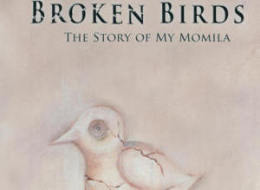
Jeannette Katzir's struggle to get Broken Birds: The Story of My Momila published serves as yet another example of why "self-publishing" should be treated as a legitimate form of literary output, and not looked down upon by industry insiders. Publishers more concerned with market trends than exceptional writing or storytelling are constantly passing over books and authors that do not easily fit in whatever niche markets the publishers and agents are gearing towards that particular quarter.
This focus on markets is understandable as far as the business end of publishing is concerned, but adds doubt to the argument that self-published authors aren't "real" authors because they haven't proven themselves by passing through the various filters of the system. For every book rejected for inferior writing, there is undoubtedly one (if not more) passed over merely because it isn't the right time, or sales in that genre are currently lackluster.
Keep this story in mind the next time you consider passing over a Self-Published book because it isn't a "real" book. Some might resort to self-publishing because they couldn't get past the editor, but there are just as many that couldn't make it past the publicist. Read the Article at HuffingtonPost
The old-school publishing companies have been waging an ongoing battle on multiple fronts these days, all of them with different aspects of the same mortal enemy: the dreaded e-Book.
And they thought self-publishing was becoming a pain in the ass.
There has been a lot of news regarding powerful brick-and-mortar publishers and their constant struggle to catch up with and wrestle into submission the ever-increasing market for electronically formatted books. What didn't seem like a serious threat to them in the past has suddenly become a serious threat to the status quo (much like self-publishing), and the race is now on to head this new threat to the kingdom off at the pass.
Much of the news regarding these recent attempts has covered what appear to be different aspects of the battling formats. You have major publishers like Simon & Schuster announcing a set time delay between hardcover releases and their e-Book versions. Then there are the publishing companies that are desperately attempting to convince authors (and the families of deceased authors) that older publishing rights contracts imply their ownership of electronic versions of books even though they were written before e-Books existed. Beyond these major issues, smaller individual battles rage on with specific agents and authors. And let us not forget the constant wrangling with Amazon's Kindle and Barnes & Nobles' Nook over content and accessibility.
As disparate as these fights might seem, however, they all boil down to one solitary bottom line; the bottom line. You know, money.
It has been a harsh time for publishers. Revenues have dropped drastically for all forms of publishing, from magazines and newspapers to textbooks and literature. The global economic recession has seriously reduced disposable incomes, making printed materials more of a luxury item these days. The rising costs of published materials hasn't made this any easier. When a thirty-two page comic book costs as much as most of us remember paying for a two-hundred page paperback novel, casual reading just doesn't seem so casual anymore.
Then there's the new technology. We're in the Information Age, after all, when information of all kinds is readily obtainable in multiple electronic formats, only a mouse-click away. Reading for research or recreation can be done from wherever you are sitting right now. We've reached a moment in time where people can browse vast collections of documents and written works on
their phone while on a bus. Even going through a tunnel. Now that's impressive.
But this isn't about free information, no matter what some publishers might say. Some might take up the music industry's torch by claiming that sharing of materials online hurts the industry, but that argument never holds water when they still manage to bring in billions of dollars in revenue. Besides, you don't hear any complaints about used bookstores stealing food from the mouths of publishing industry families. And libraries have been giving it away for free for years.
So what's the argument then? For the most part, it comes down to the publishing industry's unwillingness to change their pay model to represent the new technology. We saw the same thing with the massive writer's and actor's strikes a few years back. Now it is time for book publishers to step up and take the heat.
When publishing and selling a book, most of the major costs involve the physical creation and transportation of the actual book. You have to print vast quantities (that's a lot of ink and paper and glue), store them (prime real estate), and ship them (books are heavy). What is left, administrative costs and creative artist compensation, is purely negotiable.
The problem is that when it comes to the new e-Books, even though elimination of the physical costs have left the purely negotiable part of the equation as the bulk of the cost, publishers still aren't negotiating. Many out-of-print books are now being made available in e-Book form, but at prices close or equal to original print-book cover prices. New releases might be offered at more respectable $9.99 price ranges, but after that the costs can almost double for older and not-in-demand (see: non-celebrity authors) titles. Any used bookstore owner will tell you that this pricing model is ass-backwards.
This adherence to the old rules also has authors and agents bothered as well. Author's royalties are remaining at roughly the same percentage for e-Books, despite the considerable lack of publishing overhead. For the e-Books selling at the old prices, this equals a massive increase in profits for the publisher, and the author left with same amount of scraps. Now take that new release selling for $9.99 instead of the $27 (!!!) hardcover price. The author's percentage is down to nearly a third of what it would have been, while the publisher's reduced overhead still has their profit margin comfortably close to what it was before.
As publishers desperately try to rewrite old contracts and keep new releases off of Kindle and Nook eReaders, it can be easy to assume that these are the actions of an industry struggling to survive in a new age. But this one book you definitely can't judge by its cover, as the truth is far simpler. They are greedy. Like the music industry and film industry before them, they are trying to reap the benefits and rewards of a new age of digital entertainment without giving the artists involved with these creative properties their fair share.
 Image via CrunchBase



 Librie
  Reblog this post [with