Wednesday, June 30, 2010

Amazon Puts 70% Royalty in Place for DTP Publishing

Image representing Amazon Kindle as depicted i...Image via CrunchBase
Amazon Puts 70% Royalty in Place for DTP Publishing

Well, it looks like Amazon might be dragging the big publishing companies into the new technology once again.

One of my main complaints with eBooks has always been that the publishing companies were raking in extra cash at the expense of both the artist and the consumer: with eBooks being sold at the same or similar price as physical books in most cases, publishers were successfully eliminating printing and shipping costs, but without passing the those savings onto to the artist through larger royalties, or the consumer with lower prices.

Tackling this issue has been a long time coming. The massive writer's strike in the entertainment industry a couple of years ago was over very similar circumstances; distribution companies were tapping into extra income streams through new media distribution channels (such as streaming video and video on demand), but were being extremely vague about these new ventures when it came to sharing royalties with writers under contracts written up before the explosion of communications technology advancements. It is actually shocking that book publishers have been able to deflect similar arguments and concerns for so long.

Now, with Amazon offering 70% royalties for sales on books priced between $2.99 and $9.99, Amazon is effectively forcing the publisher's hand on their sketchy pricing policies regarding new technology book sales, while also easing criticisms of their price reduction policies. This should not only improve writer confidence in releasing works in eBook format, but the lower pricing involved with the royalty shift should also result in increased book sales. Of course, Kindle sales might also increase a bit, which I'm sure is one of the main motivating factors behind the move.

I'm sure a lot of people in the industry will have some very persuasive and logical arguments on why this new royalty scale for eBook publishing is a bad thing. But I seriously doubt any of them will be able to convince me that either the publisher or the artist will stand to lose any money.
Enhanced by Zemanta

Tuesday, June 22, 2010

Book Review - My Footprint by Jeff Garlin

Having never watched Curb Your Enthusiasm (yeah, I'm THAT guy), my only familiarity with Jeff Garlin in the past has been recognizing his voice as the Ship's Captain in Wall-E. So when I picked up his book, My Footprint: Carrying the Weight of the World, I did so with no preconceived notions or expectations, other than that I was about to read a humorous story about one man's quest to lose weight and 'Go Green'. I give this disclaimer only to separate myself from those familiar with Garlin who have gone on to either devotedly praise the book or trash it because they expected so much more.

As someone who has struggled with weight loss, I found a great deal of sincerity and honesty in Garlin's writing. Unlike many books on the subject, Garlin focuses more on the ease of failure rather than success, and how hard it can be to change ingrained and previously unrecognized habits formed over a lifetime. Like most comics, Garlin turns as harsh an eye onto himself as he does others, and he is the first to make a joke at his own expense, adding a glaring truthfulness to the recording of his attempts at weight loss. Without this kind of sardonic and insightful self-awareness, the book (and his journey) would ring hollow. In this respect, Garlin's book is a resounding success. Where it falls short, however, is the overall reading experience. Despite the author's obvious desire to take the reader on a journey through his own experiences, there is no real flow to the novel, and progressing through it feels more like a stumble through disjointed thoughts and anecdotes than it does a trip through one man's story of self-discovery.

Perhaps what hurts Garlin's book more than helps it is the diary format. While this approach might seem like the logical choice for the author's desire to bring his readers along on his journey of self-improvement, it can often feel as random and disjointed as, well, a diary. Much of the ground covered within the book is spread thin and jumbled nonsensically, resulting in a disjointed structure that continually fails to draw the reader in. If Garlin had taken the time to arrange his thoughts and experiences into whole chapters dedicated to a particular focus, like a chapter about the pitfalls of dieting on set ("How to CURB Your Appetite") or his experiences with Ed Begley Jr. ("My Green Guru"), then perhaps his struggles would have had more of a literary impact. Even more importantly, he might have been more successful in thematically joining his desires to lose weight and decrease his carbon footprint, rather than have them continue to feel like two almost unrelated personal goals. If the idea behind the format was that our increasingly Twitter-truncated communication culture would make a book in bite-sized segments more popular, it was a bad idea. Most readers, despite the popularity of text messaging and Facebook status updates, prefer to read books that are more than just random thoughts and musings jotted down throughout the day and faxed to an editor.

This isn't to say that Garlin's book is bad. As I said earlier, his struggles with weight loss and environmental awareness are inspiring as they are humorous. But the way in which he tells his tale makes the book feel like little more than an afterthought. In the end, as endearing and humorous as it might be in spots, My Footprint comes off as haphazard and unstructured as Garlin's admittedly slipshod approach to dieting, leading to the wish that he had struggled to improve his writing before writing about his struggles to improve.
Enhanced by Zemanta

Monday, June 21, 2010

The Holocaust Ended? In Jeannette Katzir's "Broken Birds", Her Mother Brings It With Her To Los Angeles


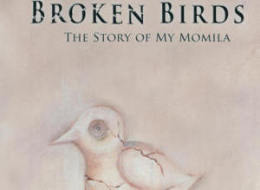
Jeannette Katzir's struggle to get Broken Birds: The Story of My Momila published serves as yet another example of why "self-publishing" should be treated as a legitimate form of literary output, and not looked down upon by industry insiders. Publishers more concerned with market trends than exceptional writing or storytelling are constantly passing over books and authors that do not easily fit in whatever niche markets the publishers and agents are gearing towards that particular quarter.

This focus on markets is understandable as far as the business end of publishing is concerned, but adds doubt to the argument that self-published authors aren't "real" authors because they haven't proven themselves by passing through the various filters of the system. For every book rejected for inferior writing, there is undoubtedly one (if not more) passed over merely because it isn't the right time, or sales in that genre are currently lackluster.

Keep this story in mind the next time you consider passing over a Self-Published book because it isn't a "real" book. Some might resort to self-publishing because they couldn't get past the editor, but there are just as many that couldn't make it past the publicist.
Read the Article at HuffingtonPost
Enhanced by Zemanta

Tuesday, June 15, 2010

MovieSucktastic Episode 16: The A-Team and Drive-Ins

Yes, the MovieSucktastic podcast is back on schedule, after an extended hiatus so I could (unsuccessfully) attempt to track down co-host Joey, who was abducted last month by militant Avatar fanatics in retaliation for my past anti-Avatar reviews.

But the hunt is over now, and I am back in action and well into the MovieScottastic swing of things with my full-on review of The A-Team, which I screened at Becky's Drive-In. This, of course, also leads to a brief rant about moviegoers and drive-in moviegoers, and their never ending quest to ruin the movie-going experience for the general public. Here's a quick preview: what do you do when a crying baby isn't loud enough to disrupt the film? Bring the dogs along as well, of course.

So tune in and check out the latest on the A-Team, as well as my opinion on the film's lack of a Mr. T cameo. I pity the fool who doesn't listen to the latest episode, either at iTunes, Podcast Alley, Podcast.com or MovieSucktastic.com. Current plans for the next episode include reviews of Killers, The Human Centipede, and Deadtime Stories..

Enhanced by Zemanta

Monday, June 14, 2010

Book Cover Update!

Head on over to the Official Author Website of S. Michael Wilson and check out the cover for the upcoming anthology Butcher Knives & Body Counts: Essays on the Formula, Frights, and Fun of the Slasher Film, due out in October from Dark Scribe Press, featuring work from over seventy authors, including yours truly!
Enhanced by Zemanta

Saturday, June 12, 2010

Oil Rig Safety or Zhu Zhu Pets? Hmmmm...


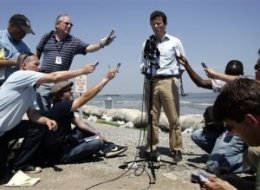
I realize that the focus of this article over at HuffingtonPost is on the GOP acting as giddy as schoolgirls over news coverage of the economic impact the drilling moratorium will have, and that I should probably be ranting about the concept of arguing that we should overlook safety issues critical to human life and ecological purity. But I really can't get beyond this one quote halfway through the article:

Peter Duet, in a thick Louisiana accent, tells the assembled crowd that he is a single father and that his daughter recently asked him why he works so much at Port Fourchon. "Baby, so daddy can take you to Wal-Mart and buy you toys[.]"

Why is daddy begging the President to bypass the investigation of safety regulations that could potentially prevent another massive oil rig disaster just so he can go back to working so many hours that his daughter asks why she rarely sees him? Does he instinctively explain that he is trying to support them financially, or working to provide a comfortable future for her? No, first thing out of his head is that he slaves away for one massive corporation because he needs lots of money so they can buy lots of cheap crap from another massive corporation that makes its money by selling products made overseas by overworked wage slaves for yet another massive corporation.

I understand that this is a highly consumer-based culture, but to see it stated so shamelessly is kind of unsettling. Not only is the pursuit of amassing piles of poorly made plastic (and potentially poisonous) possessions the first thing to pop in this guy's head when "Baby" asks why she never sees him, but it doesn't even occur to him to change his reply to something more rational before sharing this anecdote with a national television audience.

Are we that twisted as a nation that we instinctively put the pursuit of the mindless accumulation of physical possessions ahead of the obvious concerns of food, shelter and well-being? I have no doubt that Peter is a good man that is actually working hard to provide for his daughter. I can even understand that his reaction to the massive BP oil spill and rig explosion has more to do with his personal needs than global concerns; as a single father, his world begins and ends with his daughter. But it still bothers me that the first thing he can think of to explain to his daughter why he works so hard s because they need to Buy More Stuff. We have lost something integral to our existence as human beings. As a nation, as a culture, as a people, we are in danger of losing ourselves.

Enhanced by Zemanta

Friday, June 4, 2010

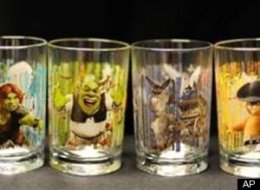
McDonald's Recall: "Shrek" Glasses Contain Toxic Metal Cadmium


Cheaper is better! Cheaper is better!

*Massive oil spill caused by cutting corners*

Cheaper is better! Cheaper is better!

*underpaid workers killing themselves in China*

Cheaper is better! Cheaper is better!

*McDonald's almost poisons millions of children*

I think I see a pattern here...
Read the Article at HuffingtonPost
Reblog this post [with Zemanta]

Thursday, June 3, 2010

Rash Of Suicides at iPhone Factory Inspire Pay Raise, Safety Nets

How to create an iPhone app online?Image by dianagavrilita via Flickr

Enjoy your iPhones, people.

You know you are in trouble when your company installs safety nets because of the high suicide rate among workers. The article mentions that the average worker pay is roughly $130 a month. What it doesn't mention is that the minimum cost of living in China is $400 a month. The 30% pay raise that the heads at Taiwan's Foxconn Technology Group approved won't even increase their base income to half of that. "With the pay raise, we hope workers don't need to work overtime as much and thus gain more time for leisure and have a happier working environment." Yeah, that ought to do it. He goes on to say that the meager pay raise will also help reduce the turnover rate. Do you think they include the replacement of suicidal employees in those numbers?

With all of lip service being paid to the environment with our newly found "green" attitudes, it would be nice if we could start admitting that our consumer habits effect more than carbon footprints. Half of the world's population is being slowly worked to death so the other half can update their Facebook status from the coffee shop.

Maybe we can create an iPhone app that allows users to send a buck or two to the wage-slaves overseas producing their electronic toys for them.

Read the Article at HuffingtonPost
Reblog this post [with Zemanta]

Sunday, May 30, 2010

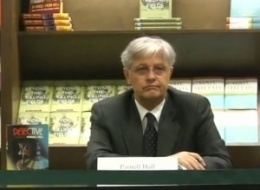
Mystery Writer Parnell Hall Sings The Book Tour Blues (VIDEO)


Be careful what you wish for, especially if you are a writer.

Parnell Hall's tongue-in-cheek music video humorously yet accurately depicts the double-edged sword that is finally becoming a "published" author: now what? Book signings are one of the Holy Grails of the struggling author, but seldom does it occur to them (okay, us) that unless you are one of the elite literary celebrities who are well-known enough to have name recognition with people who have never read your books, it isn't likely that you will have a crowd of people asking you about you and your latest novel.

As Hall clearly demonstrates, the only thing worse than being an obscure author is being an obscure author at a book signing at the same table as Mary Higgins Clark.


Read the Article at HuffingtonPost
Reblog this post [with Zemanta]

Wednesday, May 5, 2010

Book Review: The Rare Anthology

As with any short story compilation, The Rare Anthology is something of a mixed bag. A collection of horror stories ranging from impressively brutal to disappointingly tame, the book's host Brian Knight (credited as "Compiled by") has assembled a bunch of horror stories with no discernible theme connecting theme, despite Knight's convoluted explanation in the introduction that the stories all contain "something rare." Of course, the reason for why the stories are included in the book isn't important, what's important is how good the stories are.

There are some truly choice cuts in this compilation, and three of them actually share a theme of obsessions. J. Newman's opening story, When Satan Sings Th' Blues (13 Sinful Selections From A Little South O' Heaven)...Vol. I., is a charming little tale about a vinyl record collector's ultimate find, a demonic blues album. Sasquatch Cafe, by the book's Compiler Brian Knight, is a cautionary tale of what happens when you push the boundaries of culinary experiences, and features a truly great twist ending. Then there is Funky Chickens by Drew Williams (The Corruptor), which explores the darker side of roadside attractions featuring mutated livestock. All three deliver on the promises made by the opening paragraph, the true sign of a competent short story writer.

Two other excellent entries delve into the battle-of-the-sexes, and takes 'battle' quite literally. Old Bones, Old Bones is a well-crafted examination of of battered women, emotional trauma and protective fetishes by Kim Guilbeau, while M.J. Euringer (The Jaws of Adanadelivers a cryptic yet compelling tale of power, desire, submission and dominance in The Jeweler. Both are a little deeper then your typical shock and slash stories, deserving of compilation if feminist-themed horror stories.

My personal favorite of the bunch, however, is Freak Gallery by Daniel W. Gonzales. A journalist's journey into the twisted world of a demented painter that can only end in madness, Gonzales' story is not only full of startling imagery, but features masterful lines that will attack your eyes and lay eggs in your brain, and that's what good writing is about.

The rest of the collection ranges from poor to passable, and is mostly populated by the usual suspects: killer plants, killer tattoos, family curses, medical torture, and brutal killers who have the tables violently turned against them. Not all of them are bad, but none of them brings anything fresh or new to the table. Even the Edgar Allen Poe parody at the end, The Tell-Tale Fart, is a bit longer than the joke demands.

Still, six out of seventeen isn't that bad of a ratio for a horror compilation. If nothing else, it fits into the book's theme after all: really good horror stories are a rare find indeed.


Reblog this post [with Zemanta]

Tuesday, May 4, 2010

Mohammed Who?

Overheard in a conversation from the chair next to me at the barber shop shortly after Faisal Shahzad was identified by authorities as the person responsible for the failed car bombing in New York City:

Barber: "You see they caught that guy that left the car bomb in Times Square?"

Patron: "Yeah. What do you expect, that's how they're raised over there, bunch of psychopath savages."

Barber: "I heard he was born here."

Patron: "Doesn't matter. It's that religion the bring over here with them. They all worship Ali."
Reblog this post [with Zemanta]

Monday, May 3, 2010

Fat Kids Get Bullied More? Really?

I try not to bitch and moan too much about useless tests and surveys that are performed in the name of science or knowledge and then later highlighted as transitional filler during the cable news hour-long cycle. Harping on why scientists would study cricket orgasms or the eating habits of nuns (does that count as a pun?) gets old quick, and more importantly, "useless" studies singled out by politicians usually end up having legitimate scientific implications. It's a waste of time that doesn't seem worth the effort.

But of course, I had to turn on MSNBC today at the exact moment they ran a quick news item about a recent study that has shown that obese children get picked on more than children of average weight.

Holy shit. Really? Are they sure about this? I mean, maybe we should get a couple more years of research under our belts before jumping to any harsh conclusions. Don't get me wrong, I'm sure that Dr. Julie C. Lumeng from the University of Michigan led the study thoroughly and without cutting corners. But I'm going to need some pretty well document case study reports to convince me that overweight children are picked on more. The whole idea sounds more than a little suspect to me.

In case you missed it, the previous paragraph was more than a tad sarcastic.

Of course fat kids get picked on more. Nobody likes a fat kid, and everyone knows it. You couldn't come up with a better example of common knowledge if you tried. Unless you managed to grow up without being exposed to any kind of unsupervised social interaction with other children, you aren't even going to attempt to deny it. Fat kids are catnip to bullies, so much so that even non-bullies feel compelled to mess with the fat kids. Its just some perverse extension of human nature that will never be eliminated. Remember Piggy from Lord of the Flies? Yeah, of course you do. Everyone who reads above a third-grade level does. Piggy was the fat kid, and what happened to him? That's right; his classmates crushed him to death with a giant rock. And you know how many English students in middle or high school read that chapter and found it to be outrageous, unrealistic, or even a tad unusual? None of them. Not even the fat ones.

But I'm not annoyed that someone felt the need to devote time and energy into proving empirically that fat kids get bullied and abused more than skinny ones. I'm not even upset that they felt the need to publish the results in some bizarre attempt to further educate the world about this previously unrecognized bias against chubby kids. Not at all.

What pisses me off to no end, however, is that the continual and unrelenting joke that is the American News Media somehow felt that this startling revelation was newsworthy enough to not only publish as if it were an actual news story, but to highlight with other breaking news items during the course of a normal news cycle. Not only do they care so little about delivering real news that they'll waste time with this useless nonsense, but they think so little of the average viewer that they seem convinced they are stupid enough to actually consider this a real news story.

The sad part is, they're probably right. About the stupid American audience, I mean. Then again, they're also right about obese children being bullied more. Just ask a fat kid, they'll tell you.
Reblog this post [with Zemanta]

Thursday, April 29, 2010

Making Unpopular Literary Connections

TelefonImage via Wikipedia

About two hours into my late night English class, an integral part of Project Unending Education, Robert Frost's poem Stopping by Woods on a Snowy Evening came under scrutiny when one of the students interrupted the Professor's praise of the rural imagery to point out that many people consider the poem to be about suicide.

A friendly yet heated debate broke out, with the Professor rejecting this interpretation despite its growing popularity among the students. Not be left out of the conversation, I decided to add some cultural background to the discussion:

"Actually, it seems to be a common interpretation," I blurted out. "The last stanza of the poem was even used as the trigger phrase to activate sleeper-agent suicide assassins in the Charles Bronson espionage thriller Telefon, which ironically was an adaptation of a novel by the same author who wrote the book that Die Hard 2 was based on."

The entire class freezes in an uncomfortable, wide-eyed silence, all eyes focused on me sharing the same
mixed expression of confusion and disbelief.

Someday I'll learn that not everything has to do with movies, even when it does.
Reblog this post [with Zemanta]

Wednesday, April 28, 2010

Book Review: The Mystic Arts of Erasing All Signs of Death by Charlie Huston

Web Goodhue is what many might refer to as a loser. A former schoolteacher turned full time slacker, Web divides his time between surviving off handouts and pissing off anyone he comes in contact with. Things begin to change rapidly, however, when his friend and roommate loses what remains of his patient understanding and forces him to take a job with a mutual acquaintance. This plunges Web into the bizarre and gruesome world of Crime Scene Cleaning, launching him on a frantic and brutal journey that will force him to examine his few crumbling relationships, re-evaluate his life, confront hidden memories of a traumatic past, and deliberate on the best way to clean brains and skull fragments out of shag carpeting.

The Mystic Arts of Erasing All Signs of Death is one of the few stand-alone novels of Charlie Huston, the popular crime fiction author responsible for the successful Hank Thompson and Joe Pitt series. Departing once again from his popular serialized novels, Huston has created a wonderfully captivating story of self-discovery and evaluation with enough criminally insane characters and violently graphic murder scenes to please even the most jaded pulp fan.

The majority of the book’s success rests on the shoulders of the main character Web, whose first-person narration guides us through his personal journey. Web is the perfect anti-hero, displaying anti-social behaviors and poorly motivated decision-making that repel the thought of emulation, yet with a level of self-awareness and confusion that never risks alienating the reader. The slow reveal of the source of his post-traumatic disorder not only explains his behavior without excusing it, but its revelation is a surprisingly human and believable scene, and a true testament to Huston’s mastery of true-to-life dialogue and the frailty of human emotion. Also, his sudden relationship with the daughter of the suicide victim of his first crime scene cleanup, while convenient for the advancement of the story, is far from contrived or easily explained away.

Nevertheless, this is a gritty crime story, and Web’s road to emotional discovery is heavily paved with ruthless killers, street-hardened hoods, delusional criminals, and a wide variety of inventively graphic deaths. The title of the book refers to the newly chosen career path of Web’s, Crime Scene Cleanup, and a good portion of the story dwells on the darkly humorous potential inherent in scraping up and hauling away the aftermath of violent crimes and messy suicides. From detailed explanations of how to get blood off wallpaper to the results of committing suicide with a pipe-bomb suppository, Mystic Art dwells in so much bloody minutiae that the reader will occasionally wish they had a hazmat suit of their own. Of course, this sort of detail could easily devolve into a tedious grocery list of factual data reminiscent of Chuck Palahniuk’s works, but Huston never comes close to overwhelming or boring his audience with the research he obviously put into the novel.

Charlie Huston is well known for delivering top-notch work, and The Mystic Arts of Erasing All Signs of Death is no different. It is an unflinching exercise in gallows humor and crime drama with a solid plot and remarkable yet wholly believable characters. Not only will you enjoy it, but you might even learn how to detect blood splatter on upholstery.

Reblog this post [with Zemanta]

Tuesday, April 27, 2010

Are The Children Our Publishing Future?

British editions of the seven Harry Potter booksImage via Wikipedia
Harlan Coben to write Young Adult Novels

It seems like a lot of authors are making the switch to teen audiences these days. Harlan Coben signs a three-book deal to write about a teenager attempting to expose a conspiracy behind his family, F. Paul Wilson has a new series of young Repairman Jack novels on the way, and the list continues to grow. And it isn't just books, either. The next batch of James Bond movies are going to focus on a young, teenage Bond (presumably minus the martinis and gratuitous sex), and have you see the new Doctor Who? More like Doogie Who-ser, M.D. Of course, it isn't unusual for Hollywood to tone everything down to a broader PG-13 audience when things get tight, but at this point I'm waiting for Dan Brown to announce a new young adult series featuring a teenage Langdon skipping his study hall to chase down adolescent Templars.

So what gives? Have teenagers suddenly grown as a literary market? It seems kind of contradictory that Young Adult sections at bookstores and libraries are doubling in size at the same time that parents and other irrational busybodies are crying out that texting and twitter are raising a generation of functional illiterates. Then again, I've always been wary of the naysayers who claim that the advancement of communications technology actually has teenagers communicating less. But even if I disagree with that, can I deny that teens are spending more and more time online, texting, tweeting, messaging, and playing video games that becoming eerily realistic? How can teenagers squeeze all of this in and still have time to read the last Young Adult series? They must be, as I would hope the publishing industry has sales numbers to back their big push to enlarge the YA market.

Harry Potter and Twilight might be a major reason for the move. All of those young kids who started reading the first Harry Potter have grown u along with the scar-faced wizard, and have joined forces with the equally obsessive (if not more so) Twilight crowd. With such a large fan base of teenagers devouring Atlas Shrugged-sized tomes about glittery vampires and dysfunctional warlock apprentices, and spending great wads of cash on anything tying in with the books and movies in the process, there is definitely money to be made. But how does that translate into bigger book sales overall, especially in a recession that has even the major publishers scrambling to justify their roles in the marketplace?

My theory (and I'm sure it isn't mine alone) is that the blending of technologies into the world of print, far from being the death knell of the publishing industry as many have predicted, has actually begun to breath new life into it. While eBooks and eReaders have yet to take over the marketplace, they are definitely gaining in popularity, and have helped make written works more easily accessible to those with powerful handheld communication devices, and we all know how much teenagers love their powerful handheld communication devices. Add this to the growing number of teenagers actively reading or writing in the ever growing blogosphere, and you have a new generation of children actually being led to the literary world by the very machines we feared would destroy it.

So yes, we will most likely see an increasing number of established authors jumping gleefully into the Young Adult pool. And as eReaders and ePublishers begin integrating animation and interactive features into their eBook releases, more and more kids are going to be tricked into thinking that books are just as cool, if not cooler, than 3D movies and PSP.
Reblog this post [with Zemanta]